

What Is the Pelvic Floor?
The pelvic floor is a group of muscles, ligaments, and connective tissue that sit at the bottom of your pelvis, forming a supportive “hammock” between your pubic bone in the front, your tailbone in the back, and your two sit bones on either side. It serves as the foundation of your body, providing core support for your spine and pelvis, helping maintain posture, and allowing efficient movement and control of your bladder, bowel, and reproductive organs. These muscles help:
- Support your pelvic organs (bladder, uterus or prostate, and rectum)
- Control bowel and bladder function
- Helps you start and stop urination
- Helps control bowel movements
- Relaxes when you go to the bathroom, contracts when you need to hold
- Contribute to sexual function
- Plays a role in arousal and orgasm
- Helps with comfort during penetration
- Assist with core stability and breathing mechanics
- Works with your diaphragm, deep abdominals, and back muscles
- Helps manage pressure when you breathe, move, lift, cough, or jump
Like any muscle group, the pelvic floor needs to be able to contract and relax on command. Problems begin to present themselves when the pelvic floor gets stuck in either extreme.
Overactive Pelvic Floor
An overactive pelvic floor (also called hypertonic pelvic floor) means the muscles are excessively tense and have difficulty relaxing. Instead of turning on and off as needed, they stay in a partially contracted state.
Think of it like flexing your bicep or clenching your jaw all day — they will eventually become very sore, dysfunctional, and painful. The pelvic floor is a group of muscles and they behave the same way.
Tight muscles do not mean strong muscles. Many overactive pelvic floors are actually weak and fatigued, just locked in a guarded state unable to relax.
Failing to relax properly leads to issues with pelvic pain and during normal functions like urination, bowel movements, or intercourse.
Key Symptoms
Because the pelvic floor is involved in multiple systems, symptoms can vary widely.
Urinary Symptoms
- Urinary urgency or frequency
- Difficulty starting urine stream
- Feeling of incomplete emptying
- Burning without infection
- Stop-and-start flow
Bowel Symptoms
- Constipation
- Straining with bowel movements
- Feeling of incomplete emptying
- Pain with bowel movements
Pain Symptoms
- Pelvic pain or pressure
- Pain with sitting
- Tailbone pain
- Low back, hip, or groin pain
- Pain with intercourse
- Pain with tampon use or pelvic exams
Sexual Symptoms
- Pain with penetration
- Difficulty with arousal or orgasm
- Post-intercourse pelvic discomfort
Causes
Chronic stress and anxiety
- The pelvic floor is highly responsive to stress
- Chronic “fight or flight” tone increases muscle guarding
Holding patterns
- Habitually clenching the abdomen or glutes
- Constantly “sucking in” the stomach
- Bracing during exercise or daily activity
Pain or injury
- Back, hip, or abdominal injuries
- Tailbone trauma
- Post-surgical guarding
- Endometriosis or pelvic pain conditions
Athletics and high training load
- Heavy lifting with excessive bracing
- High-impact sports
- Core training that emphasizes constant contraction
Postural and breathing patterns
- Shallow chest breathing
- Rib cage restriction
- Poor diaphragm mobility
Why Kegels Can Make It Worse
It has been a widely accepted belief for a long time that anyone who has pelvic floor issues should be prescribed kegels — but if the pelvic floor is already overactive, more contraction can worsen symptoms.
It’s like prescribing bicep curls to someone with a bicep spasm.
For overactivity, the focus is first on:
- Relaxation
- Lengthening
- Coordination
- Nervous system down-regulation
Then strength work (often targeting the deep core) comes later.
Treatment Options
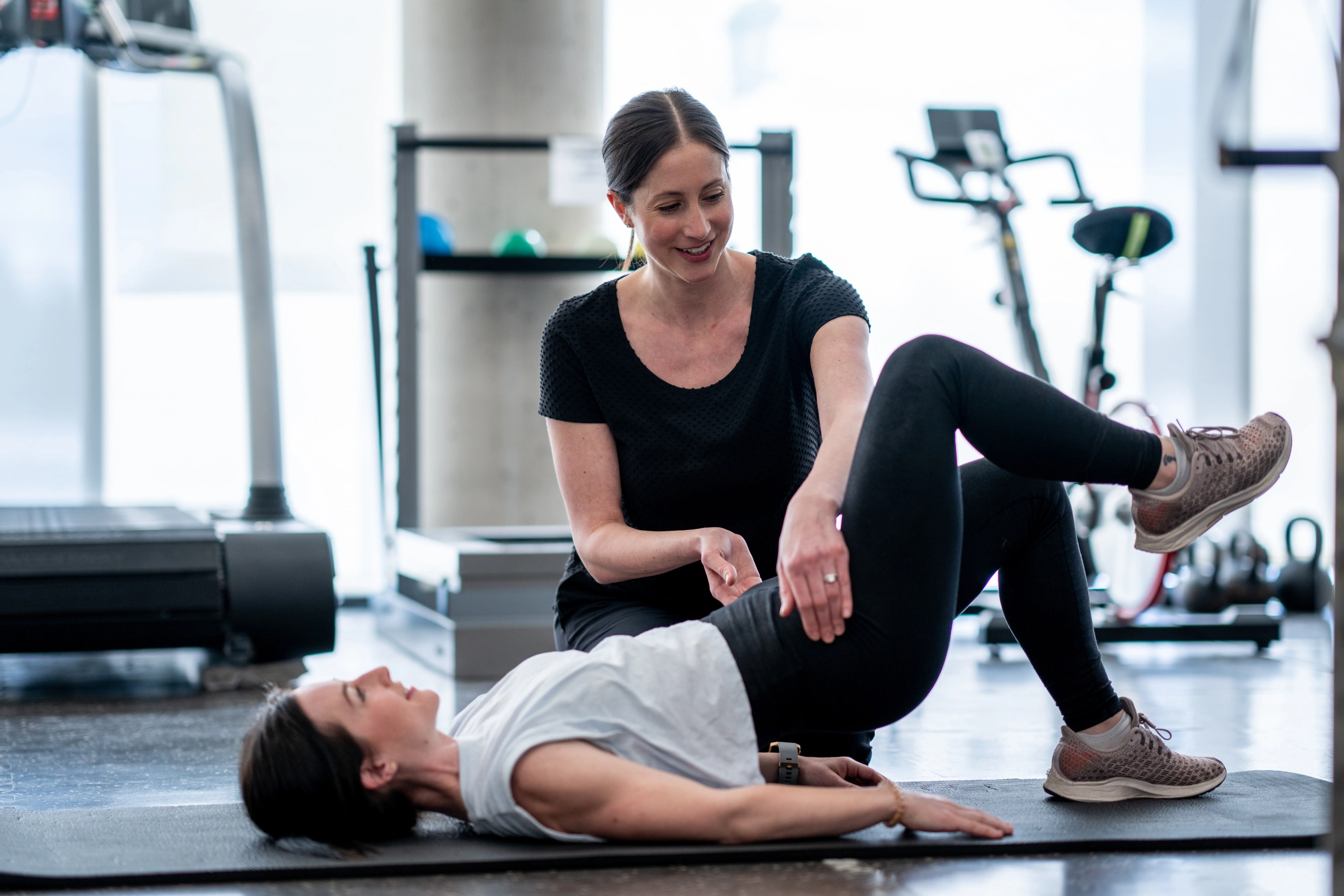
Pelvic Floor Physical Therapy
A trained pelvic health PT can guide:
- Muscle relaxation training
- Down-training and coordination work
- Manual therapy (internal and external when appropriate)
- Movement retraining
- Gradual return to loading and sport
When to Get Evaluated
You should consider a pelvic floor evaluation if you have:
- Persistent pelvic pain
- Urinary urgency without infection
- Pain with intercourse
- Chronic constipation
- Tailbone or deep hip pain
- Symptoms that haven’t improved with general exercise
Early treatment often leads to faster recovery.
Key Takeaway
Pelvic floor problems are not always about weakness — sometimes they’re about too much tension. An overactive pelvic floor is common, underdiagnosed, and highly treatable with the right strategy.
If your symptoms seem confusing or inconsistent, it may not be a strength problem — it may be a coordination and relaxation problem.
And the solution isn’t always more effort — sometimes it’s learning how to let go.