
By: Stephen Magee
I recently asked the following question on my social media:
“How long until a behavior-induced disease becomes a genetic predisposition in a family history?”
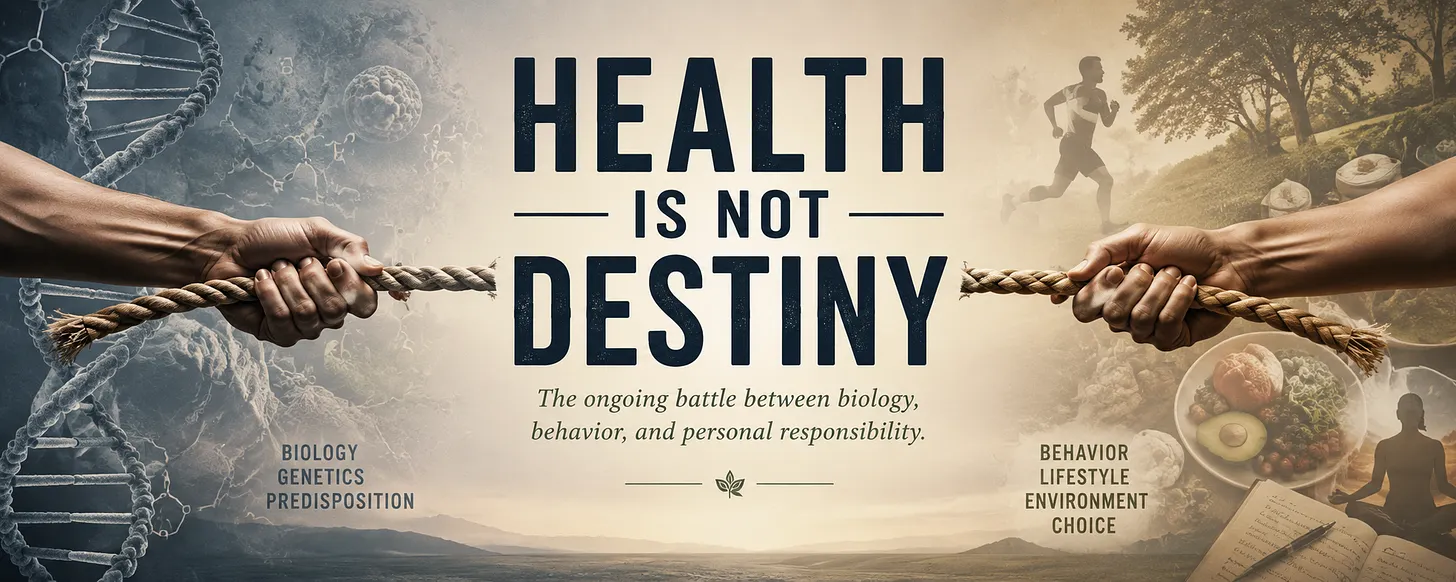
Said another way, if I make poor lifestyle choices that eventually lead to a disease, at what point does that impact my child’s health risk? Is our health influenced more by nature or nurture? What is the more potent factor in determining health: the genes our parents gave us or the lifestyles we choose to live?
My purpose in asking the question was simple: I wanted people to think differently about health. I wanted them to consider what actually drives disease, and more importantly, what responsibility each of us has in pursuing health.
My Bias: We Are Too Quick To See Ourselves As Victims Of Our Health
My perspective: we have been conditioned as an American society to believe that we are primarily passive victims of our health, and that the choices we make have less influence on our health than variables outside of our control (most prominently family history).
The prevailing thought process I see clinically is that disease, or the absence of it, is something that happens to us rather than something that we have significant influence over. This may not be an overt thought, but it is often the covert driver of how we interact with our healthcare system.
We all know deep down that the choices we make about food, exercise, mental health, and other lifestyle factors play a role in our health. However, when we receive a diagnosis, it is easy to accept the “woe is me” victim mentality. Whether it is a rotator cuff tear or heart disease, if we are told it is linked to our family history, it becomes easier to accept that this was caused by something outside of our control.
If this diagnosis was inevitable and there was nothing I could do to stop it, why even try?
The catalyst for change moves from an internal locus of control to an external one. The real problem? We begin believing that the solution to our health problems is found outside of our own choices and that we must rely on others (pills, injections, surgery) to manage them.
Case Study: “Why waste my time with discipline, effort, and self-control?”
I have a patient whose husband has a significant family history of heart disease, with many males in his family dying between their 40s and 60s from heart-related illness.
This gentleman has a sedentary job with numerous stressors, including travel, frequent eating and drinking while entertaining clients, and high-pressure meetings. Because of his lifestyle demands, he has gained significant weight, lost consistency in the gym, and developed poor sleep habits.
After a recent cardiology visit, his interpretation was that because of his family history, heart disease was likely his inevitable outcome and there was little to nothing he could do to change that trajectory.
He was told there was “LITTLE TO NOTHING HE CAN DO ABOUT IT.”
Never mind the rapid descent into metabolic syndrome (see below) that he experienced over the previous one to two years. Never mind all the conservative levers proven to positively affect health that were missing from his daily life.
There was little to nothing he could do about his heart health because his family history was what it was.
So what does the patient do?
What would anyone do when faced with the decision between immense self-control and delayed gratification versus eating, drinking, and avoiding discipline if the outcome is supposedly the same?
He doubles down on the behaviors that are contributing to his declining health because, in the end, “there is nothing he can do.”
The Four Horsemen of Slow Death
One of the great health minds of our time, who shall remain nameless in my primary text*, broke death into two categories: “fast death” and “slow death.”
Fast death was described as car accidents, gunshots, and other major traumas that we are largely not in control of. This category represents a smaller percentage of deaths in our country, and outside of risk management behaviors, there is not much we can do to prevent it.
Slow death, on the other hand, is the primary killer of Americans. In this category, he outlined four “Horsemen” that, in combination with one another, contribute to the majority of chronic disease burden in our country.
The four Horsemen are cancer, metabolic diseases, cardiovascular disease, and neurodegenerative conditions.
These four categories of disease act over decades of life and are often not recognized until they reach more advanced stages, when interventions are less likely to completely reverse the damage.
While one Horseman is specifically named “metabolic disease,” this health expert linked metabolic drivers and influencers to all four categories.
In particular, these metabolic factors are things that we can influence and serve as drivers, sustainers, and even potential creators of these diseases.
Metabolic Syndrome: The 5 Warning Signs
There is a condition called metabolic syndrome that serves as a risk profile for Type 2 diabetes, heart disease, and stroke. It is a five-factor metabolic assessment that I believe serves as a valuable screening tool for overall health.
- Waist circumference
- Triglycerides
- HDL
- Blood pressure
- Glucose
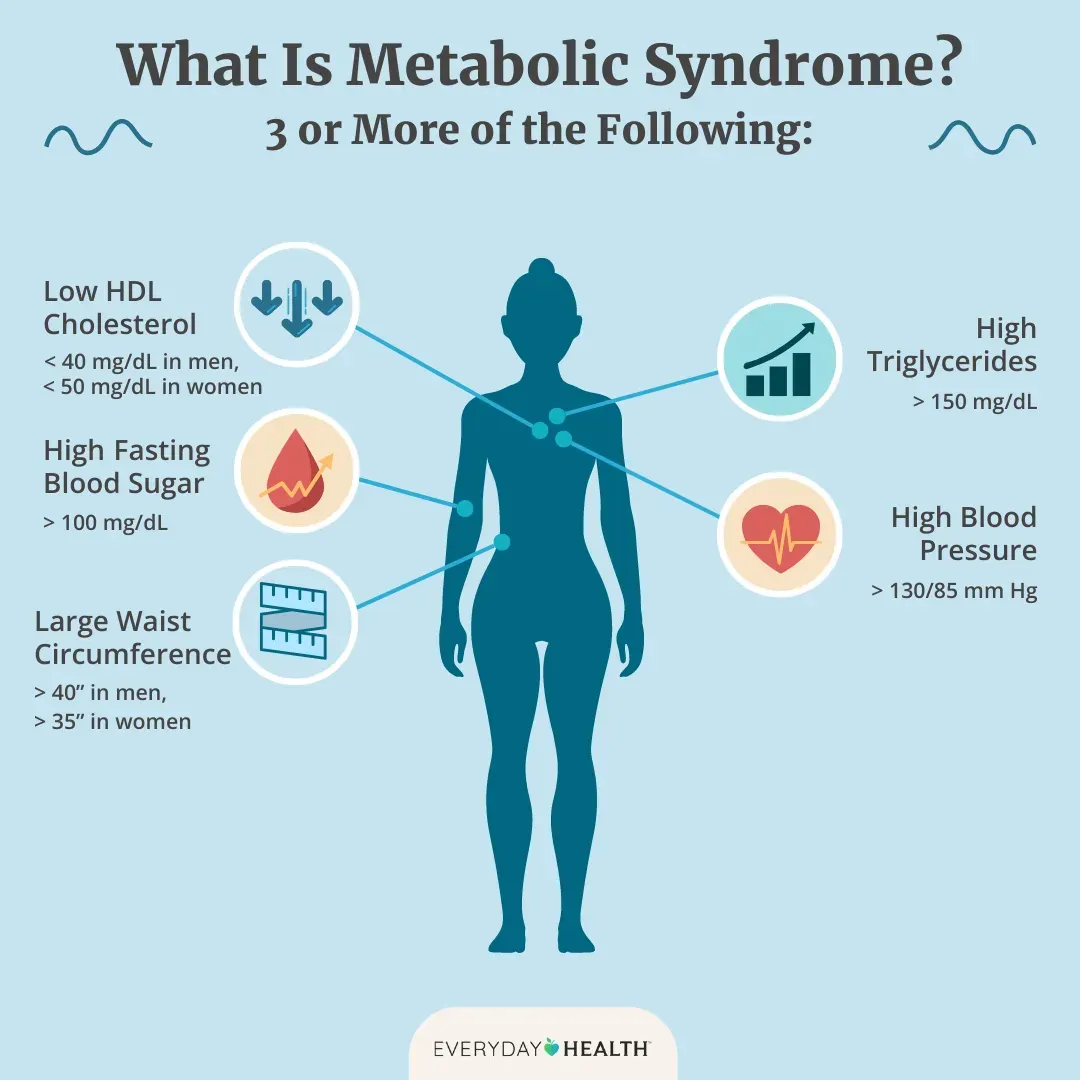
These five metabolic criteria can serve as early warning signs for a variety of underlying diseases.Behavior strongly influences all five metabolic syndrome criteria and, for most people, represents the most modifiable contributor. These five metabolic criteria provide an important framework for understanding health, but they are only one piece of a much larger conversation.
There are several concepts that I believe are central to understanding health: metabolic syndrome, the psychology of suffering, the limitations of our current healthcare system, and the six foundational pillars of health: diet, sleep, stress management, exercise, breathing, and positive relationships.
Each of these topics deserves its own deeper discussion, and I plan to explore them individually in future posts.
For now, the foundational question remains: are we passive victims of our health, or do we have more influence over our health trajectory than we realize?
Our metabolic health is largely influenced by how we eat, exercise, sleep, handle stress, and manage our relationships. The choices our parents made do not automate a problem for us in these areas.
We hold significant responsibility.
Genetics Loads The Gun, Behavior Pulls The Trigger
I am not here to say that genetics plays no role in our health. It certainly does. All four Horsemen have genetic correlations. For certain diseases, hereditary links serve as the primary risk factor.
However, for many chronic diseases, genetics is not the primary driver but is often blamed as if it is.
I once had a professor who used the phrase:
“Genetics loads the gun, behavior pulls the trigger.”
We are not passive victims of the genes our parents gave us. We have significant influence over how those genetic predispositions are expressed.
No matter what our parents’ health looked like, we are responsible for pursuing our own health.
Consider even the timing of disease within a family history. I am currently in good health with 0/5 metabolic syndrome risk factors (my first humble brag on a blog).
All three of my boys are already born (and my urologist made sure there would only be three).
If I drastically changed my lifestyle by quitting exercise, adopting consistently poor eating habits, and allowing my anxiety to go unmanaged to the point where I developed metabolic syndrome and eventually Type 2 diabetes, my boys’ medical records would now include a family history of diabetes.
The healthcare system would now view them as having increased risk from a disease process that was not present when I passed my genes to them.
That family history, while relevant, could potentially influence clinical decision-making in a way that does not fully account for their individual health journey.
This is where nature versus nurture comes into play.
Are the genes I passed to my children at conception putting them at risk for metabolic disease, or is it the environment and behaviors I modeled after they were born?
If I stop caring about exercise and nutrition, am I teaching that to them?
Our healthcare system sometimes gives too much weight to family history in areas where personal behavior plays a much larger role. Family history is an important risk factor, but it is often interpreted by patients as destiny rather than probability.
The consequence?
It creates patients and future patients who become passive victims of the inevitable aches, pains, ailments, and diseases they believe are predetermined by their ancestors.
“This discussion naturally leads into several larger conversations: why we become passive victims, the psychology behind behavior change, the role of our healthcare system, and the foundational habits that drive health. Each of these deserves its own discussion, and I plan to explore them in future posts.”
Final Thoughts
So do my actions really matter when it comes to my health?
You bet your adipose tissue they do.
Your behavior is one of the most powerful drivers of your health.
My goal is not to ignore genetics or pretend that disease is always preventable. My goal is to remind people that risk is not destiny.
The most powerful health interventions are often the simplest: how we eat, how we move, how we sleep, how we manage stress, and how we care for the people around us.
These choices rarely produce dramatic results overnight. But stacked together over years and decades, they shape the trajectory of our lives.
Health is not created by one perfect decision. It is created by thousands of consistent decisions repeated over time.
So let’s get to work. Our family history should inform our decisions, not determine them.