


Interview with Julian Prosser
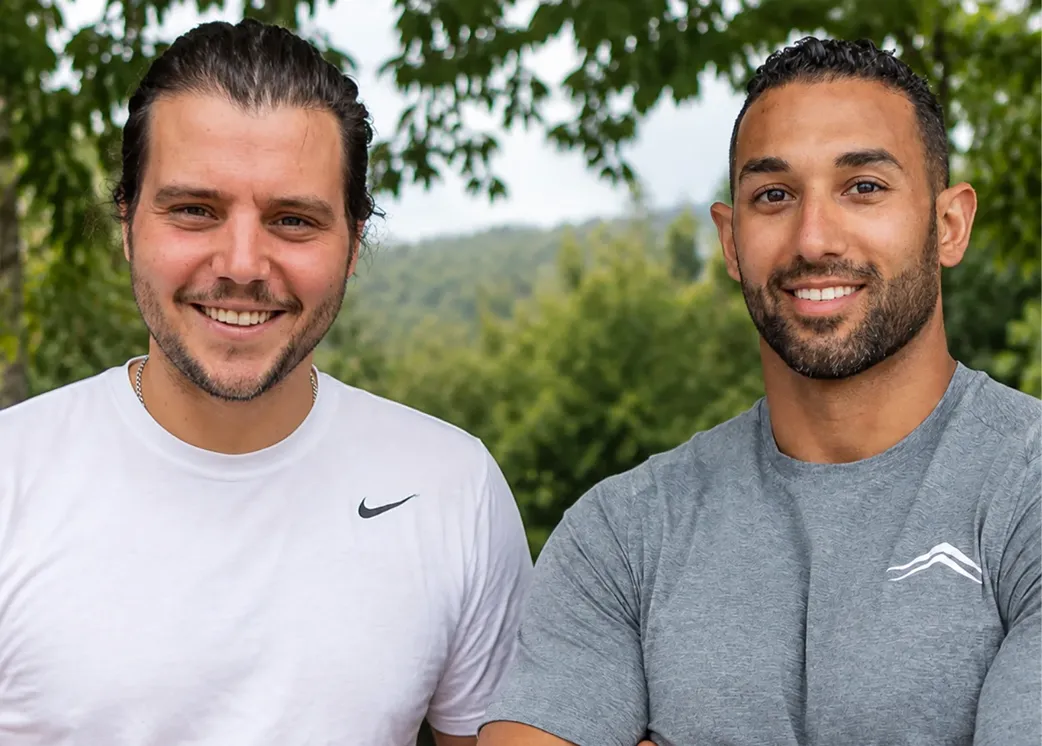
Spotlight Series Topic: The Connection Between Mental Health, Athletic Performance & Overall Wellness with Julian Prosser, LCSW
Guest Name: Julian Prosser
Guest Credentials: Licensed Clinical Social Worker (LCSW); Sports Psychologist
Discussion Details: In this Peak Performance Spotlight, we sit down with Julian Prosser, LCSW, therapist and Director of Convo, to discuss the connection between mental health, athletic performance, relationships, and overall wellness. Julian shares his perspective on anxiety, stress, emotional health, performance pressure, and why taking care of your mental health is just as important as taking care of your physical health. We also explore how sports therapy and mental performance strategies can help athletes and active individuals perform at their best while navigating setbacks, injuries, and the pressures of competition.
Benefit of Watching: Whether you’re an athlete, active adult, high performer, or simply looking to improve your overall well-being, this conversation provides practical insight into the mental side of performance and health. You’ll learn how to recognize when you may benefit from professional support, better understand the relationship between mental and physical health, and gain perspective on how emotional awareness, stress management, and mental resilience can contribute to better performance and a healthier life.
Address of guest’s business: https://www.convowellness.com/services-9-1
Tony Faraj: What’s up, man? Good morning. Happy Monday. Happy Monday.
Julian Prosser: We made it work. Dude, we did it. Oh, those musical chairs.
Tony Faraj: No doubt. How’s your Monday going?
Julian Prosser: Rocking and rolling, man. I’m over balancing my week because I’m leaving for the Dominican.
I’m going for like 10 days. I’m going to have some fun on the island. I’ve never been there before, so I figured I’d just go check it out.
I went to Puerto Rico this time last year, so I just chose a different place. It should be fun and novel. Have you ever been there?
Tony Faraj: I have.
Julian Prosser: Where in the DR are you going?
Tony Faraj: Okay, sick. We’re staying in Santo Domingo, which is the capital, and then going to La Samana, which is like a peninsula in the north. Nice.
Julian Prosser: And got a lot of mountains, rivers, waterfalls, all sorts of fun shit to get my hands on. So I’m excited. Let’s go.
Tony Faraj: Fun, man. Awesome. Any excursions that you guys have planned already or just going to kind of feel it out when you’re there?
Julian Prosser: Yeah, I’m just winging it.
I’m very type D when it comes to that type of shit, man. I’m very organized and a planner in my work life, but I’m kind of a hobby traveler, and I’ve spent a lot of time in different countries and stuff. I kind of just wing it.
So I don’t really have too much planned. I know I want to go see some monkeys because they have monkeys in the jungle, in the rainforest. So I’ve never seen those before.
That’d be cool. But ultimately, hopefully jumping off some cliffs into some water and seeing some falls and just kind of chilling on the beach.
Tony Faraj: Nice, man.
Julian Prosser: Nothing too organized just yet. A little brain break for you?
Tony Faraj: Yeah, I didn’t take any vacation over the summer, which is nice. It’s palatable and tolerable, Michigan, over the summer.
So it works a little bit slower. But once we get back into fall and school time, work starts ramping up. So I like to find some balance and taking a break.
Julian Prosser: Yeah, absolutely. Well, I appreciate you jumping on the call with me today, man. Well, we’ll keep this short or as long as you want.
So I’ve got a few questions that I want to dish out your way and kind of let our audience get to know you a little bit better in the market that you serve as well. So for people who may not be familiar with your specific work, tell us a little bit about your journey into becoming a therapist and what led you to create Convo.
Julian Prosser: Sure, I’d be happy to shine some light on that for you.
Thanks for having me, by the way. I appreciate our efforts to collaborate. And I’m looking forward to supporting Peak Performance, man.
I know a couple of you guys already. And it’s been a pleasure getting to know you better. But our worlds definitely can collide.
My name is Julian, for the record, and I’m a therapist and social worker. And I got certified by the University of Michigan to take care of professional athletes from a sport performance optimization standpoint and also just general mental health. So that’s me kind of as an independent practitioner, but I developed Convo and the clinical director there trying to help create an integrative approach towards mental health.
So that means just leveraging all sorts of different angles to take care of somebody. We’ve got teammates that are prescribing medicine, got teammates who are doing therapy. We’ve got breathwork and meditation facilitators, life coaches, dieticians, all sorts of different people kind of help somebody out.
So ultimately, I started my social work journey as a kid. We were just involved in a lot of community service. I used to live in Pontiac and there was a big need for help.
And so ultimately my family was just rooted in community service. I grew up into a college student, decided I found that social work really aligned with my values. And one of my buddy’s dads was a therapist and told me I’d be good at it.
So it was a flattering moment in time when I was just a kid, not knowing which direction to go with my life. And it really aligned with who I wanted to become. And having a history of being a multi-sport athlete, I knew from the start when I started my journey to become a therapist that I wanted to combine my two worlds of athletics and therapy.
So ultimately I ended up at Oakland University for my undergraduate. I went to an HBCU in Georgia called Savannah State for my graduate degree. And then I came back to Michigan.
I worked with a behavioral health clinic in Rochester, which was great to me. And then ultimately decided I wanted to have the creative license to do as I pleased and try to help people out the way that I saw fit. So I developed Convo as a way to break the barriers and reduce some of the stigma and have higher access to mental health care.
And here we are now, three years later.
Tony Faraj: Dude, awesome, I love it. We’re gonna get to it in a bit later.
We’ll chat about and talk about how you take your work and how you apply it to the athletic population as well. So I’m really interested in learning about that. But before we get there, you described mental health as a societal issue as much as an individual one.
What does that mean to you? And how does that philosophy influence the way you work with your clients?
Julian Prosser: Yeah, it’s so very important to me. I think traditionally, the mental health world is just, we’re finally getting our feet wet. We had our toes wet as a society, like in the 80s, 90s, people were starting to value mental health practitioners.
But even as late as 2010, people really didn’t understand the value of having a therapist or what they could do. It’s kind of like this cornered, you know, the healthcare system that is psychology was in a little corner and it didn’t have a spotlight on it. So things are changing, which is nice.
And it’s becoming more accessible and less stigmatized. But nonetheless, traditionally, the mentality has been, you know, akin to our culture and a society in the United States. It’s very individual.
So the common statement is pull yourself up from your bootstraps and kind of just be successful on your own. So mental health has been the same in terms of the view and the perception on people like taking care of themselves. And, you know, if you’re depressed, you might be weak or something along those lines.
So we’ve had our hill to climb, but ultimately as a social worker, we were trained from a perspective of people in their environment. So people don’t exist in a vacuum and everything in their environment affects the way that they exist. And that includes their mental health.
So as a social worker, we’re trained to look through a biopsychosocial lens, biological, psychological, and social. So those three avenues really are comprehensive looking at, you know, what’s going on in your body, your physical body, your biology, what are you eating? What types of chemicals are affecting you, the psychological aspect of things, your emotions, your cognition. And then the social dynamic is like who you’re hanging out with, your partnerships, your relationships to family, and even the workplace.
So all of these dynamics influence the way that people are affected. And then we have, you know, we have cultural norms too. Somebody from Birmingham, Michigan is gonna have different cultural values than somebody in Detroit or somebody from Hamtramck or Dearborn.
So I think all of these aspects really play a role on affecting our moods, our emotions, and our cognition.
Tony Faraj: Yeah, yeah. I mean, you see it so much.
I mean, you see how people are so easily swayed by just media as well, right? And the pull from that, like I’m talking social media, right? Like you’re picking up your phone and you see somebody who’s driving a Lamborghini and they say, you know, this is what rich looks like or this is what wealth looks like. People try to pursue that, right? And like, it’s crazy how society and images like that try to shape us. And in unprecedented times, like this was so, I guess, predictable from the creator’s perspective, but like unpredictable from a society perspective.
Like we’ve never had to deal with this before. You know, our 30-year-olds and 40-year-olds are living a life, millennials, that have never, people before us have never experienced this. So there’s not a rule book to this, how to fix it and how to solve these problems.
So these are brand new issues that are showing up and we’re really just kind of flying at the seat of our pants trying to figure out how to create kind of counterbalance the impact of this stuff.
Julian Prosser: Yeah, yeah. So moving on to the good stuff here with how social work and sports kind of merge here.
I’m really interested in you sharing a little bit more about this. So as you’re aware, a large part of peak performance, our community is made up of athletes, runners, active adults, golfers, high performers. Share a little bit about what some of the mental and emotional challenges you commonly see in athletes and high achieving individuals.
Julian Prosser: Yeah, this is, I mean, a big part of my passion getting into the athlete space is because of how underserved the community is. Really from an outsider’s perspective, you look at a professional athlete and you’re like, they’re the Mecca, they’re everything. We look at our business players and we idolize them as a celebrity and as a person.
So it’s tough to kind of wrap our heads around the idea of imperfection from a humanistic perspective. We kind of just think that they’re well-polished individuals. But I always say there’s a price to pay for excellence.
These guys at the highest level, even not at the highest level, pursuing the highest level are higher levels from high school to college, college to semi-pro, whatever the latter might be. But there’s a price to pay for excellence. So ultimately from a clinical perspective, we see a lot of implications.
A lot of ADHD, a lot of OCD, a lot of perfectionism. We have anxiety, performance anxiety. We have other things that are, athletes are experiencing, which is injury.
Post-injury, what’s happening to the identity, the grief and loss of our previous abilities, the grief and loss of our future goals, becoming a collegiate athlete or professional athlete. And most of our athletes are closer to the end of their career than the beginning of their career. And I think that that’s a very underappreciated reality.
The transition from being an athlete, having competition, to going into like a regular civilian identity. Identity is extremely wrapped up in our athletic performance. And a lot of the times our athletes are experiencing personal displeasure with self if they’re not winning.
And that’s a tough space to be in because of the mental impact that plays on you. You’re frustrated going into your next game, you have less likelihood to succeed. So it’s kind of like a snowball effect in the wrong direction sometimes.
So identity is wrapped up in our performance, which is tough. And then we also see people who are like cognitively confident, like in their head, they’re confident. They say, I’m ready for this, but their body behaves in a different way.
And they’re feeling like the wobbles, they’re feeling maybe nausea in their bellies, or they’re feeling shaky or their vision blurs. And they’re like, well, what? I’ve done so many repetitions, I’m ready for this. But when competition comes, our bodies react and respond differently.
So there can be a major incongruence between that. But I think that the clinical implications, ADHD, OCD, perfectionism, depression, and substance use is a big one too, especially for retired athletes.
Tony Faraj: Oh, okay.
I mean, you touched on a lot there. And even from my experience, from friends that I’ve had who’ve played in the professional field, I see that. I see exactly that played out in their life.
So maybe you’ll be able to give us a few tips here on how you utilize your services to help with that. You offer sports therapy, and you’re certified in sports performance optimization. How can working on the mental side of performance help an athlete perform better? How will it help them handle setbacks or even navigate the pressure that comes with competition?
Julian Prosser: Great question.
This is like, this is the bread and butter. The overlap of our physical performance and our mental acuity, they’re really one and the same. I mean, understanding mental health a little bit better, like I’ve been in the industry for almost 15 years.
And really, I talk about mental health from a physiological standpoint. Physiology is our entire body, our muscles, our nervous system. And so it’s very much interconnected.
So ultimately, two things come to mind. Our cognition and our like mental health, as we might think about it, like from a standard and a typical way. And we also have our physiological health.
So how our body is responding. So basically, there’s an efficiency that’s lost. When our bodies are feeling anxious and stressed out, different parts of the brain turn on and different parts of the brain turn off.
So there’s different toggle points and those efficiencies matter. Different parts of the brain have different functioning. And so when we’re anxious and stressed out, basically that becomes our priority for our bodies to find stress relief, find safety.
Psychological safety is what it boils down to. But ultimately, if we’re not feeling safe, our other faculties start reducing efficiency. So our prefrontal cortex or our cerebellum are two parts of the brain that are really important for our athletic performance.
Those modes kind of go offline and become really inefficient. So like test taking anxiety, people can really be good with their homework, but they show up to the test and they don’t do so well, even though they know the information. Just not accessible because they’re feeling anxious and stressed.
And so like IQ is reduced by 50 to 60% on average when we’re feeling anxious. Wow. So that IQ is also, it represents our athletic ability too, our ability to problem solve and gauge distance between the ball and ourselves and our coordination, our dexterity, information processing, problem solving, creativity, the list goes on.
So all of those faculties are now reduced because we’re feeling anxious and our body can’t access that part of the brain to actually help us. So I always think about athletes who are super stressed and you’re still performing this way. Like that’s excellent.
If we just got you to feel more comfortable and more safe, you’re gonna go to that next level. Yeah. And then the other part of this is the physiology, which you guys are very familiar with in PT is like dura and fascia.
And those are just like very small, thin muscle layers that cover your larger muscle groups. And basically they’re full of neurons. The neurons that are communicating from the brain and the body, it’s bidirectional.
There’s more neurons that are communicating from your body to your brain than from your brain to your body. But nonetheless, when you’re feeling anxious, it creates psychological tension and stress in the muscles. So your muscles actually restrict and relax, constrict and relax.
And so I’m often working with golf athletes. And so like that sweet spot on the golf ball is like a square millimeter. And when you have psychological tension, your muscles can shrink by like two, three, five millimeters at a time.
So your equipment starts changing. The length of your arm starts changing. So now that sweet spot on the golf ball becomes a little more difficult to hit.
So something like that, where your body is actually changing its performance because of the stress. Both of those two things are wrapped up in our performance and have vast impacts on athletes.
Tony Faraj: Yeah.
Let’s shift over into the practical side of things. What would a session working with you look like? So for an athlete, a high-level performer, run us through either an assessment or kind of elaborate on what a session with you would look like.
Julian Prosser: Yeah, it depends.
My professional identity is wrapped up in multiple different worlds. I’m a generalist and a practitioner for general mental health. And then I also got my athlete-specific stuff.
General mental health and athletes can utilize me virtually. So oftentimes our sessions look exactly like this. It’s us having a conversation and trying to run an assessment.
It’s called the biopsychosocial assessment. So I’m asking a lot of questions about the person’s experience, getting to know them better and trying to really be empathetic enough to where I understand the theory behind everything, but I want to understand the person better. If I can understand the person better, I can create better analogies and metaphors to help them better understand this very theoretical stuff that’s in my brain.
But I got to create a bridge to gap that from this professional lingo to a layman and moreover, specific to each person’s sport. So the virtual space, one-on-one stuff is the majority of my work. But I also do, I have a cool offering in Clawson.
I’m working at the Greger, which is a golf simulator facility. And so we can actually do therapy in a golf simulator while we’re playing a sport. Whether or not you play golf is irrelevant, but we can be there in person having some fun.
And golf exposes us to our different emotional dysregulation, regulation, visualization, rehearsal, like there’s so many different aspects of golf that can be translatable to different sports. But we can run our sessions through the Greger. And over the summertime, I’ll actually take my clients on the golf course, which is a cool thing too.
So once again, it doesn’t have to be specific to golfers, but I am restricted from an insurance perspective to my office location, which is virtual. Outside of office or outside of insurance, we can kind of get creative and collaborative and come up with a different space. If that’s on the soccer field, if it’s the baseball diamond, if it’s a basketball court, we can kind of get creative with that.
So it can be conventional or unconventional, depending on what you want.
Tony Faraj: Yeah.
I’m really interested to get out on a golf course with you sometime and take you up on that offer and see what a session like that would look like.
Julian Prosser: Sir. Maybe you’ll help me improve my skills as well.
Tony Faraj: Yeah, we just had fun, Evan and I. We played the Cardinal not too long ago, one of your teammates. And he should be able to showcase. We had some fun.
Julian Prosser: And I think it’s a great opportunity to learn some new skills in a non-threatening way. And men like to play. That’s what I always talk about.
There’s play therapy for kids, but we like to play too. So bring it on. I think it’s way easier for us to access.
I mean, there’s a lot of literature for this. Accessing subconscious memories, trauma processing. Like when we’re playing, it kind of allows us to jump into the subconscious.
Whereas if we’re not playing, we have a lot of guards up and like fences, if you will, that protect our subconscious. So it’s a good way to infiltrate the psyche.
Tony Faraj: Yeah, absolutely.
Well, we’re getting ready to wrap some things up. One final question for you. For someone in the Detroit, Ferndale, surrounding communities, someone who’s interested in improving their mental health performance or overall wellbeing, but they’re not sure where to start.
What’s something you would recommend?
Julian Prosser: Well, it depends on like what their intentions are. I think anybody who’s interested in self-improvement, there’s tons of self-improvement material out there. So there’s, which is where I would start.
If I’m somebody that has no information whatsoever, no experience with therapy or self-development, I’d start with self-help books. There’s podcasts, there’s social media influencers, there’s neuroscientists on social media. So not all social media is bad.
If we can leverage it, good. It’s a good opportunity to improve. So trying to get ourselves wrapped up with information.
I think information is the most important part of this whole thing. I’m like a walking encyclopedia when it comes to this stuff. So I think me teaching people and just like, I always tell, you don’t even have to tell me about you.
I can still help you out. So it’s just general information. If we can educate ourselves a little bit better and some of it’s dry, so you gotta kind of have to be interested in it.
Nonetheless, I would be looking at podcasts, social media accounts and self-help books as a start. But ultimately, if people wanna get into therapy, if you’re thinking about therapy, I think it’s time. I think every single person can benefit from therapy.
So if you’re even considering it, there’s nothing to lose. We all pay for insurance anyway. So you might as well leverage that benefit.
And if you want to find a therapist, there’s Psychology Today, which is a really good resource. Just go to psychologytoday.com and search for keywords and people that you’re looking for in your city, locations important to you. But most people have insurance.
So I would say go that route is go through your insurance company’s website and try to start filtering out different providers. And I’m always supportive of the idea of like speed dating for therapists. It is trying to connect with multiple people over time.
And like, I might not be your best fit and that’s okay. Compatibility with your therapist is more important than the actual theory that they’re using to help you. So, and there’s tons of literature to support that.
So the personal connection is really important. So I’d say try, try two or three, four different therapists before you commit to who you want to see. And there’s no shame in changing over time.
So that would be my suggestion.
Tony Faraj: Yeah, and I think it’s important to also recognize and you kind of touched on this a little bit, but you don’t have to wait until you’re struggling significantly to seek out a therapist, right? Like I think a lot of people have, there’s like this stigma, right? Like, oh, I see a therapist. It’s like, you could go see a therapist and not be having any like significant issues.
And I think that’s something that people should recognize.
Julian Prosser: Big time. I think just with physical therapy or physical health, we talk about prevention and maintenance as integral parts of the journey.
And so I think a lot of times people, mental health is so pervasive and it’s a perceptual thing. And so people are living with themselves and there’s no benchmark for what is healthy or not. So like when it comes to physical health, like we have numbers, if you’re over a certain amount of weight, like there’s a BMI that represents, hey, you need some help.
So like those metrics are a little bit different, but we don’t really have metrics for mental health until recent. There’s actually a really cool company called Mindmetrics. When I was working at Rochester Center for Behavioral Medicine, they created a proprietary testing measure that goes through all of the best practice psychological evaluations to try to put metrics to this so that we can actually see psychological deviance.
But that’s a new tool that is still underutilized. But traditionally we don’t have metrics to help us better understand what’s going on. So I think to leverage a therapist, you know, the big dogs do it, man.
My mentor and my teacher professor at University of Michigan, Greg Hardin, was Tom Brady’s sports psychologist throughout his career. And Tom Brady, the best football player ever, like he had a guy in his corner talking about emotions and mental health. So trying to wear it as a badge of honor, like, yeah, I go seek a therapist.
And just like with physical therapy or like personal training, you know, there’s probably no stigma. Like, hey, I have a personal trainer. My personal trainer’s a dog and he’s helping me get big, you know? People are happy about that.
And they’re willing to showcase that to their communities. So that would be my hope is like, somebody’s gotta do it. Somebody’s gotta push for this being cool and this being an okay thing and it not being so strange and weird and deviant that you have some support.
So I think, you know, we’re near that, maybe another three, four or five years. But nonetheless, I think prevention, maintenance, getting some assistance, you know, it’s a good thing before you get into crisis mode. So that you can have, you know, you can have the skills that you need to leverage when life gets tough.
Tony Faraj: Yeah, absolutely. Well, Julian, thanks so much for your time, man. Just to kind of give the audience an opportunity, what’s a way that they could get connected with you? Do you have social medias, email? What’s an easy way to connect with you?
Julian Prosser: Yeah, probably the best.
My website is called convowellness.com, convo like conversation. So convowellness.com or you can shoot me an email, connectwithconvo@gmail.com. Those are the easiest.
Tony Faraj: Awesome, awesome.
Julian, thanks for your time, man. Enjoy the rest of your Monday. It was nice to see you, bro.
Julian Prosser: Likewise. Yep, bye.
Tony Faraj: Peace.